

Outdoor Fireplaces NZ — A Complete Design Guide
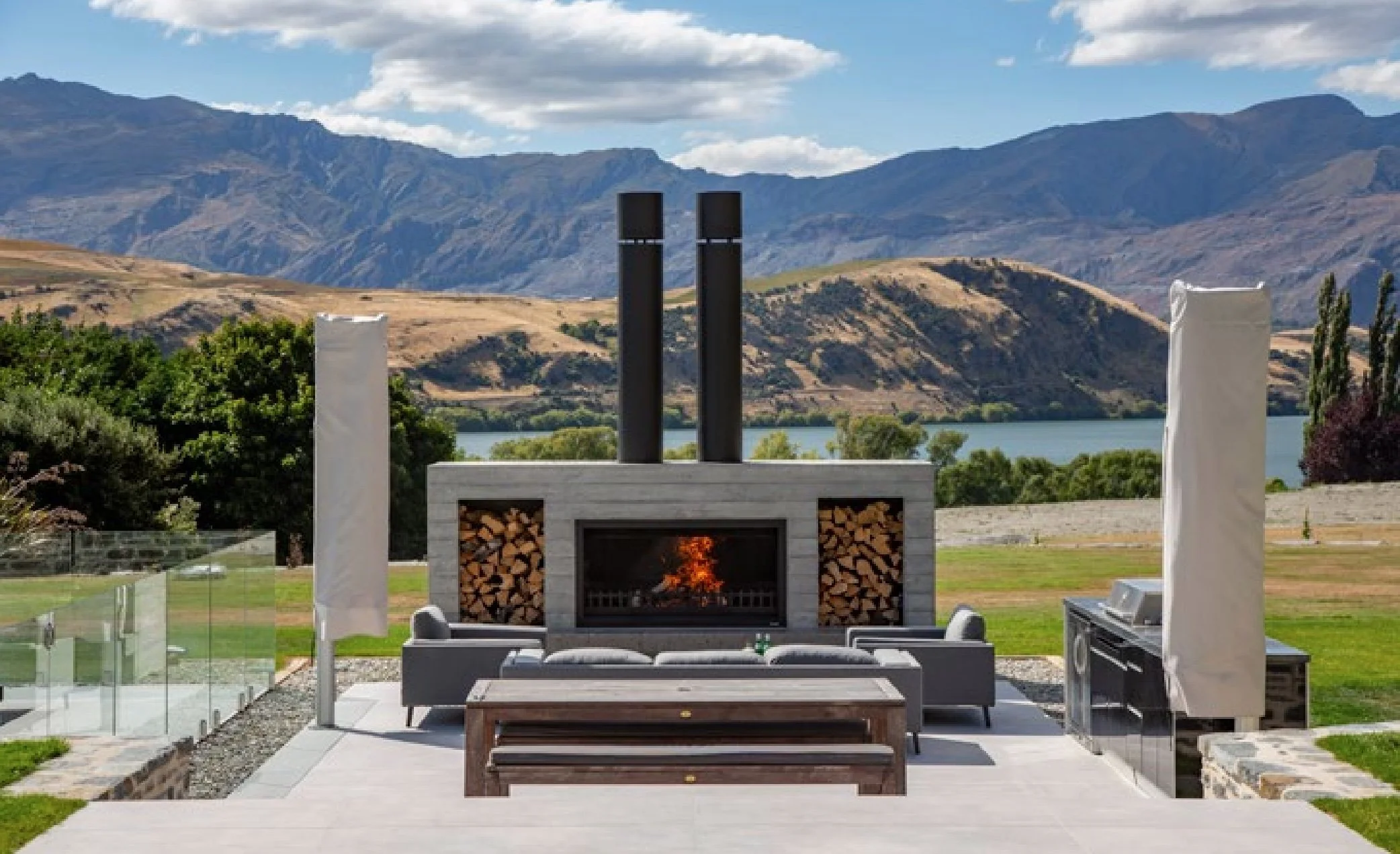
Trendz Outdoor Fireplace
Outdoor fireplaces have become an integral part of outdoor living in New Zealand. From built-in wood fireplaces and outdoor gas fires to sculptural fire features and cooking fires, there are now options to suit everything from compact courtyards to large architectural outdoor rooms.
But choosing the right outdoor fireplace involves much more than finding a fire you like. Position, wind, shelter, heat, scale, fuel type, surrounding materials and how you actually want to use the space can all influence the result.
A well-designed outdoor fireplace can define an outdoor room, create a destination within the garden and extend the use of a space well beyond summer.
This guide looks at the different outdoor fireplace options available in New Zealand, along with the design, positioning and regulatory considerations worth understanding before you choose one.

Gyrofocus Suspended Outdoor Fireplace
Start With the Space — Not the Fireplace
One of the most important decisions is where the fireplace should go.
In an outdoor environment, position has a major influence on how well a fireplace actually works. A beautiful fire positioned in an exposed location may provide surprisingly little usable warmth, while the same fireplace within a sheltered seating area can transform how the space is used.
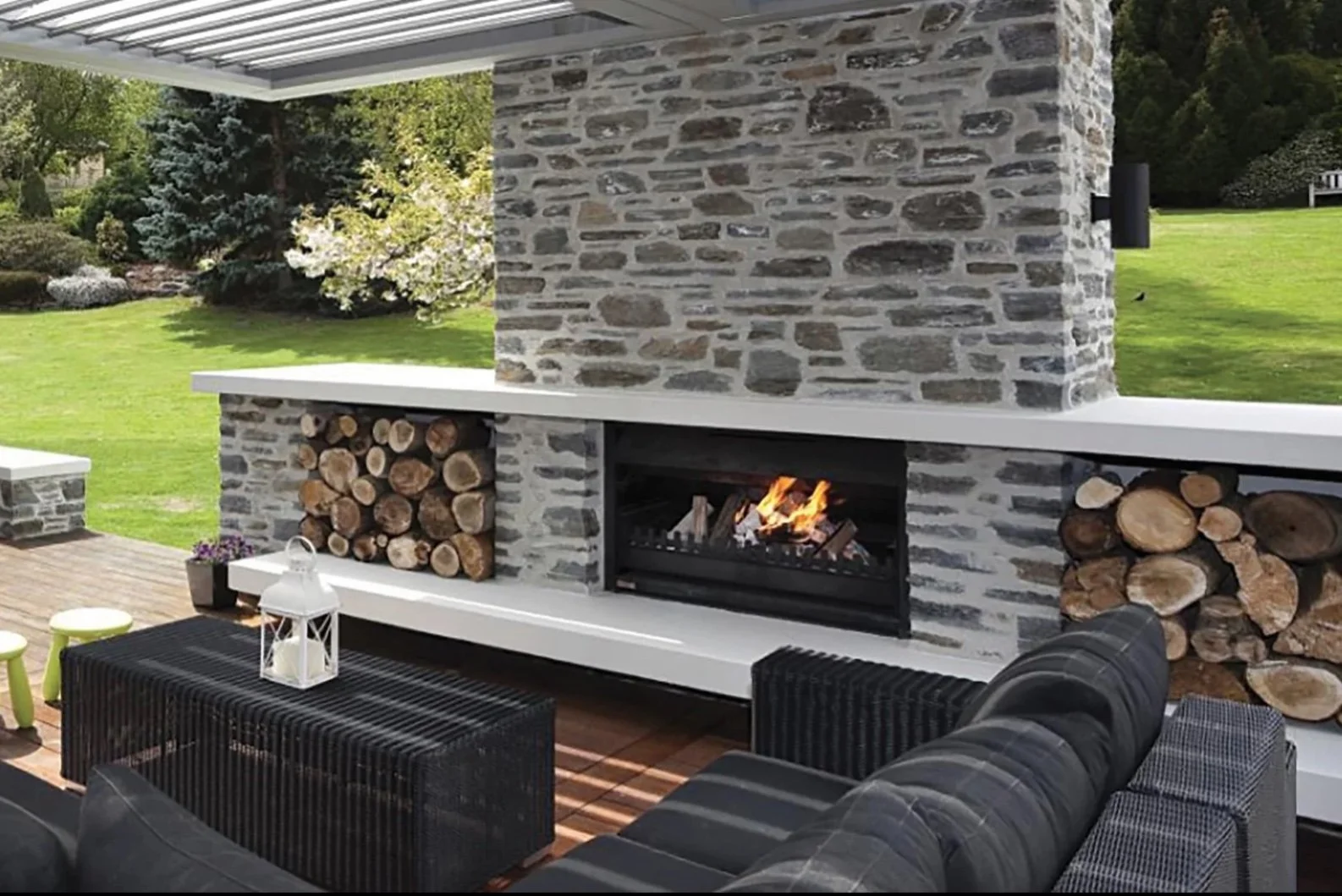
Jetmaster Alfresco Outdoor Fireplace
Before selecting the fireplace, consider:
Where people will naturally sit and gather
Prevailing wind direction
Existing shelter and whether more is required
Views from both inside and outside the house
Proximity to boundaries and neighbouring properties
Surrounding combustible materials
Access to gas or storage for firewood
Whether you want to cook over the fire
How the fireplace relates to landscaping, a pool, outdoor kitchen or dining area
The aim is to make the fireplace feel like an integral part of the outdoor design rather than an appliance added once everything else has been decided.
Completed Project — Jetmaster Alfresco 1050
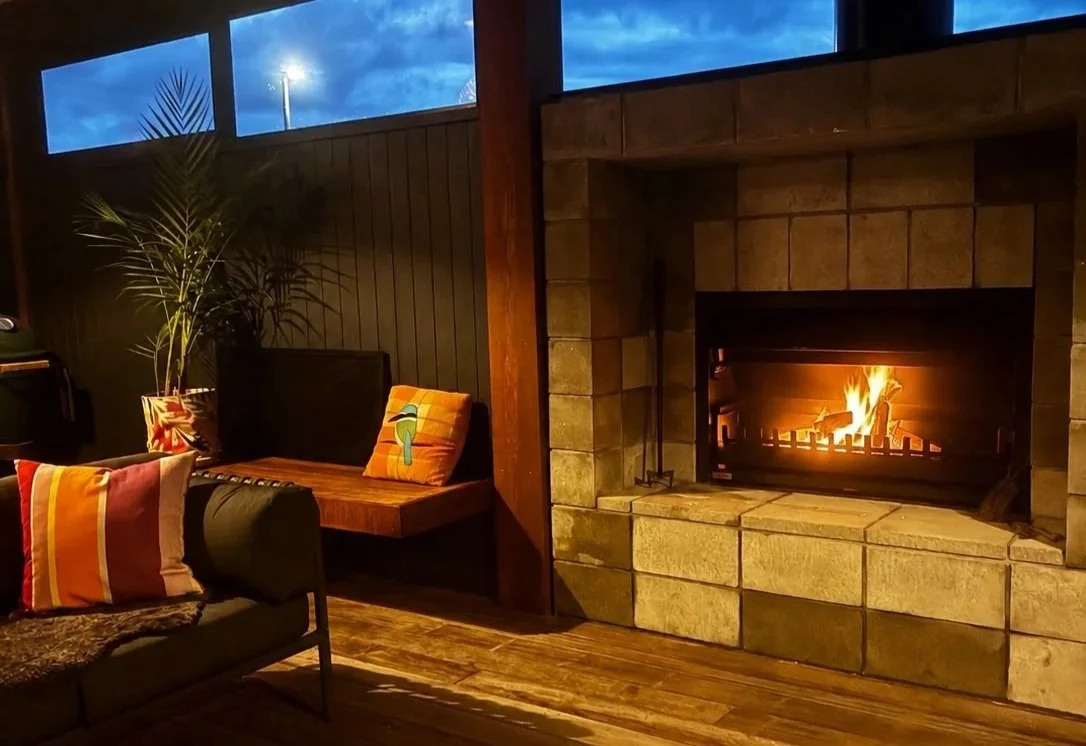
In this completed outdoor fireplace project, the Jetmaster Alfresco 1050 was incorporated into a substantial concrete block structure, making the fireplace an integral part of the outdoor room rather than a standalone appliance.
A black powder-coated floating stainless-steel capping provides a crisp architectural finish to the masonry and gives the structure a strong contemporary profile.
Choosing the Right Type of Outdoor Fireplace
There isn't one type of outdoor fireplace that works for every property.
An early decision is whether the fire should be architectural and permanent, sculptural and freestanding, or more informal and flexible.
Built-In Outdoor Wood Fireplaces
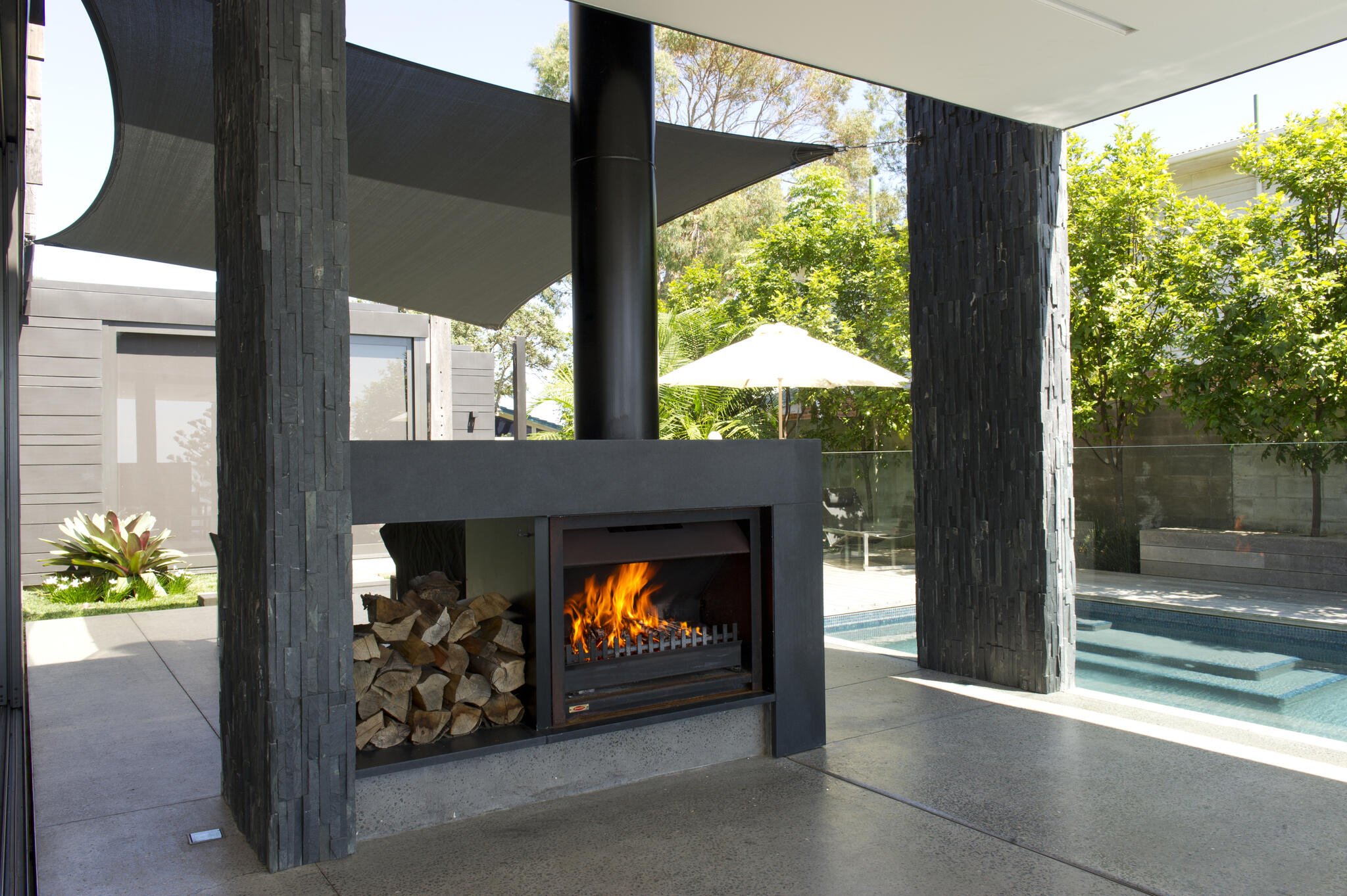
Jetmaster Alfresco Outdoor Fireplace
A built-in wood fireplace is particularly effective when you want the fire to anchor an outdoor room.
The fireplace can be incorporated into concrete, masonry, brick or other suitable non-combustible construction, allowing the complete structure to become part of the architecture.
Wood also provides something that is difficult to replicate — the sound, smell and movement of a real wood fire.
Built-in wood fireplaces can work particularly well for:
Covered or semi-enclosed outdoor rooms
Larger entertaining areas
Outdoor kitchens and dining spaces
Projects where the fireplace needs to be a substantial architectural feature
Homes where cooking over the fire is part of the appeal
Products such as the Jetmaster Alfresco range and Escea EW5000 demonstrate how an outdoor wood fire can provide warmth and atmosphere while also offering cooking capability.
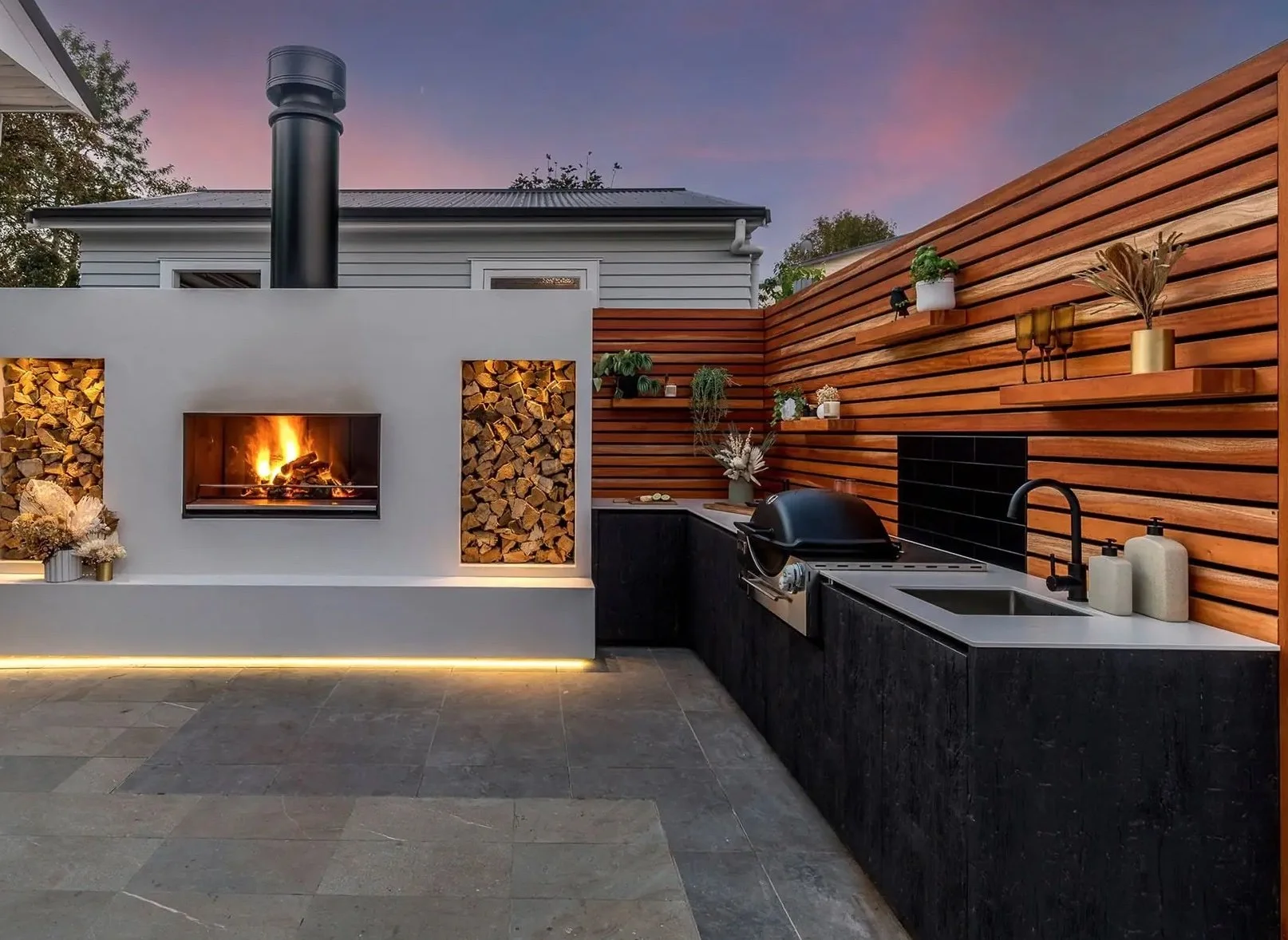
Escea Outdoor Fireplace
Sculptural Outdoor Fireplaces
Not every outdoor fireplace needs to be incorporated into a wall.
Sculptural fireplaces can become architectural objects in their own right, creating a focal point within the landscape even when the fire isn't lit.
Product Example — Glowbus Dewdrop
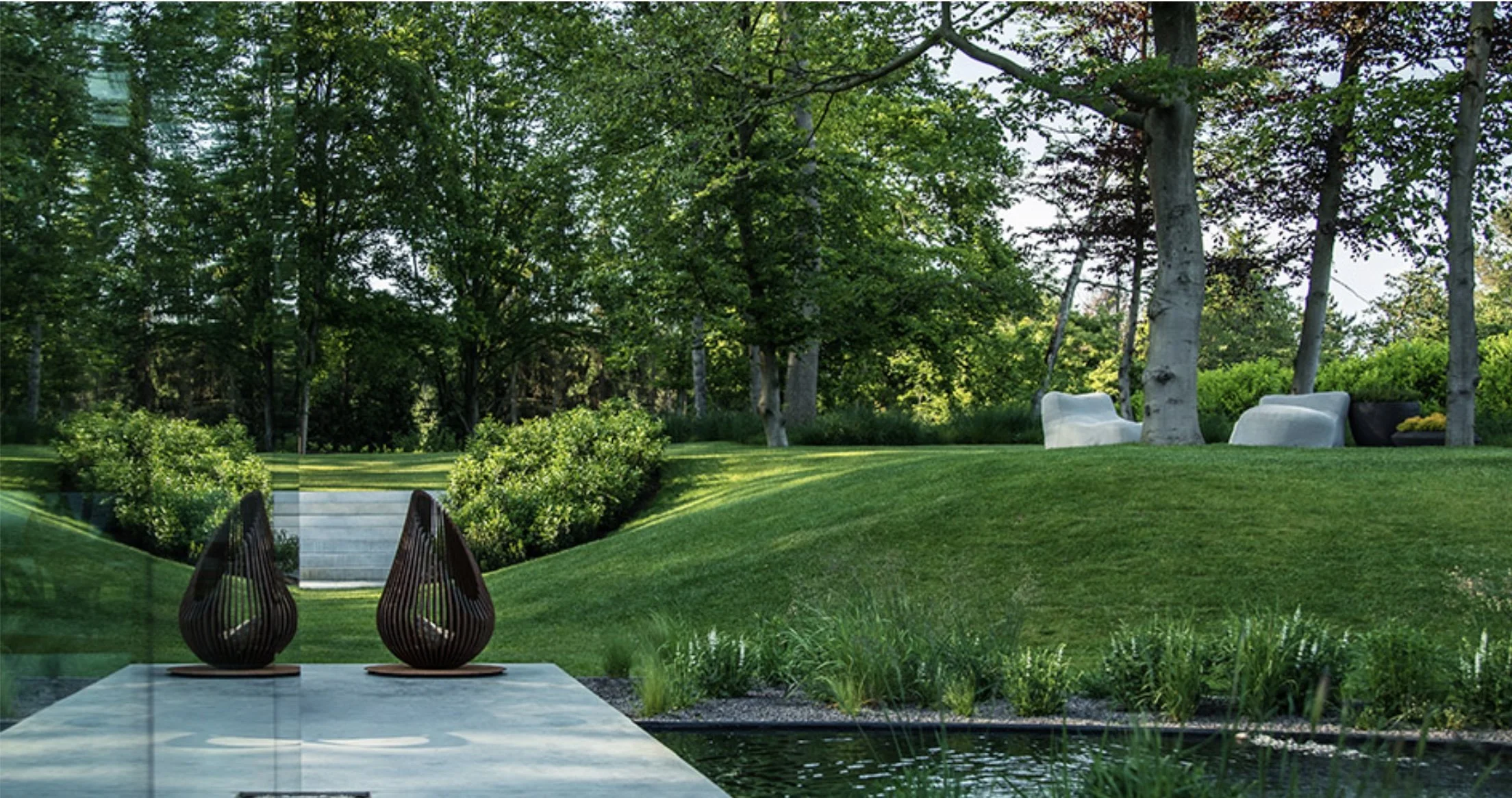
Glowbus Dewdrop Fire Pit
The Glowbus Dewdrop is a good example of an outdoor fireplace where the form is as important as the flame.
Its distinctive sculptural shape and weathered steel finish allow the fireplace to sit naturally within a landscape while still providing a strong architectural presence.
A sculptural fireplace can work particularly well when you want to:
Create a destination within a garden
Establish a separate seating or conversation area
Retain an open outlook rather than constructing a fireplace wall
Introduce a strong architectural object into the landscape
Allow the fire to be appreciated from several directions
Product Example — Gyrofocus
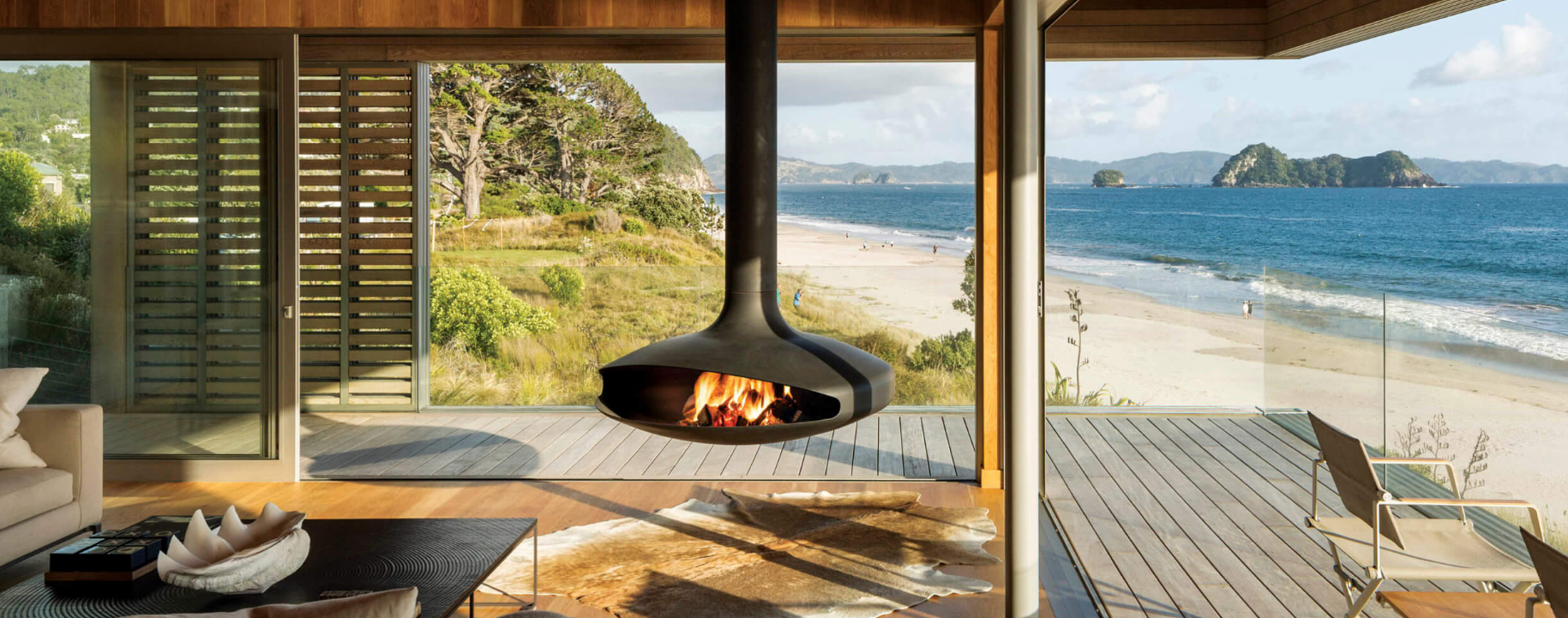
Gyrofocus Suspended Fireplace
A suspended fireplace such as the Gyrofocus offers another approach.
Its suspended form creates a striking focal point without the visual weight of a traditional fireplace structure, making it particularly suited to contemporary architecture and outdoor spaces where maintaining openness is important.
Outdoor Gas Fireplaces and Fire Features
Gas can be an excellent option where convenience, clean operation and contemporary design are priorities.
Instant ignition makes gas particularly appealing for outdoor entertaining areas that are used frequently. There is no firewood to store, no fire to build and considerably less cleaning afterwards.
Outdoor gas fires range from conventional fireplace forms to linear burners, fire tables and sculptural fire features.
Completed Project — Planika Galio Star, Te Āria
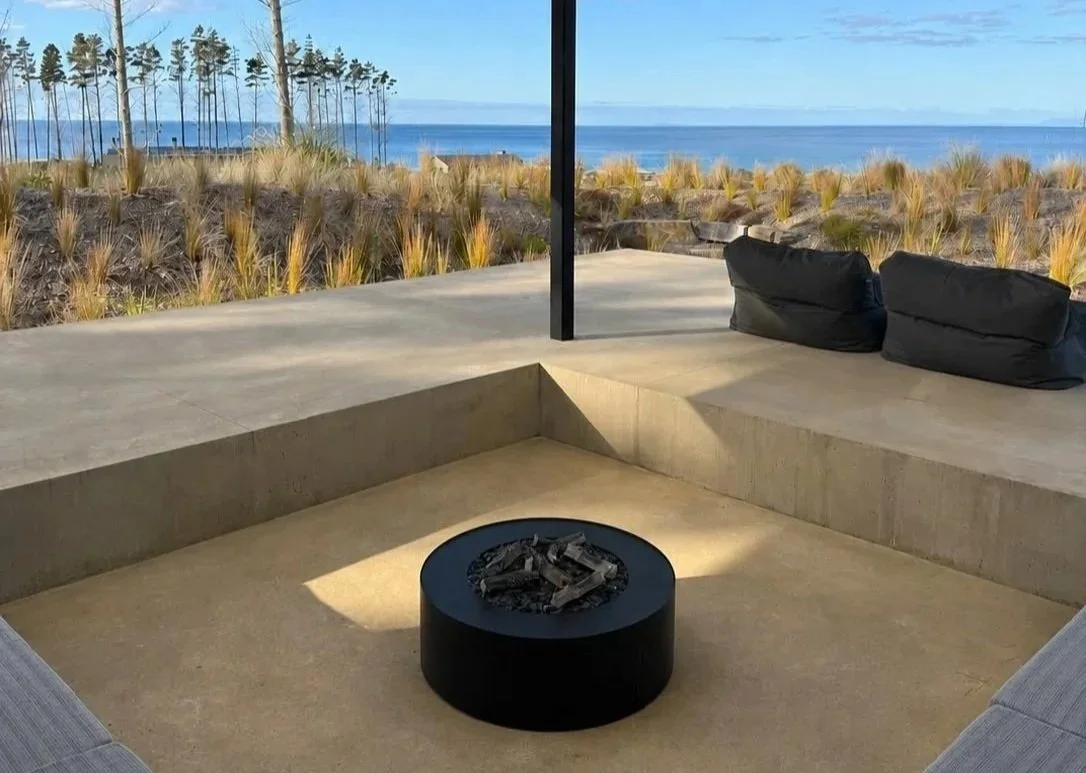
Planika Galio Star Gas Fire Pit
For this completed project at Te Āria, the Planika Galio Star creates a low, contemporary focal point without requiring a traditional fireplace structure.
Its position creates a natural gathering point while allowing the surrounding architecture and landscape to remain dominant.
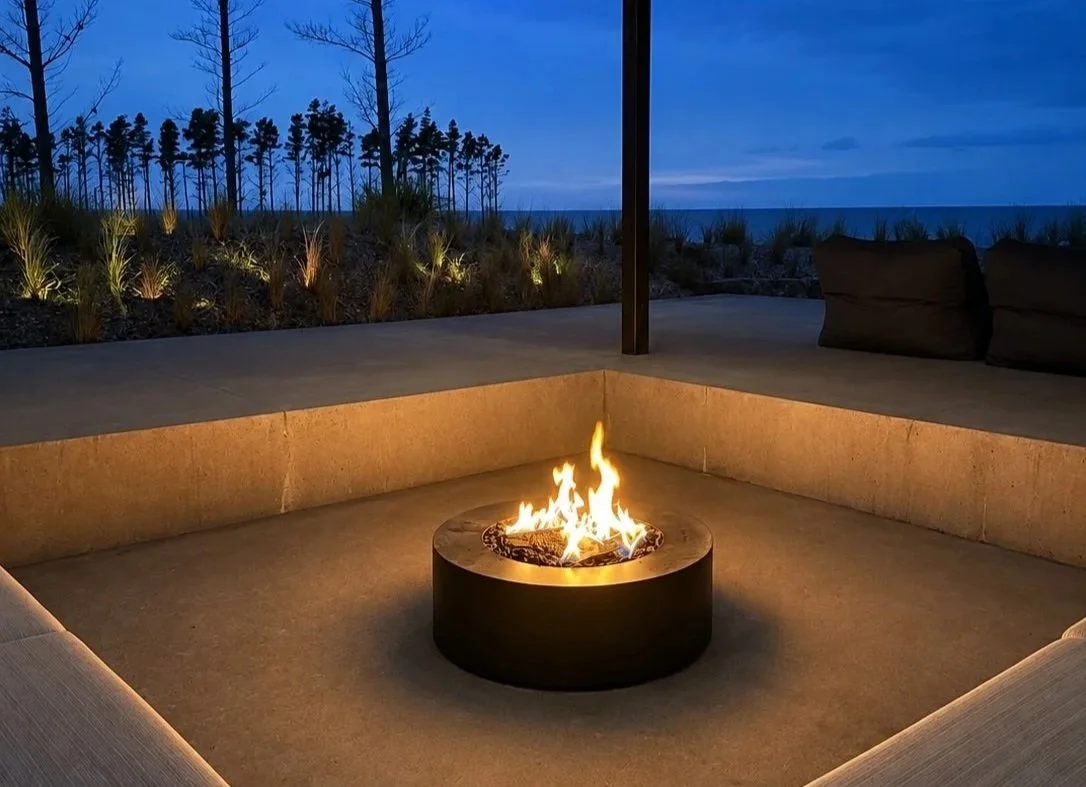
Planika Galio Star Gas Fire Pit
An outdoor fire should also be considered when it isn't operating. During the day it becomes part of the landscape and architecture; at night the flame completely changes the atmosphere of the space.
Fire Pits and Social Fires
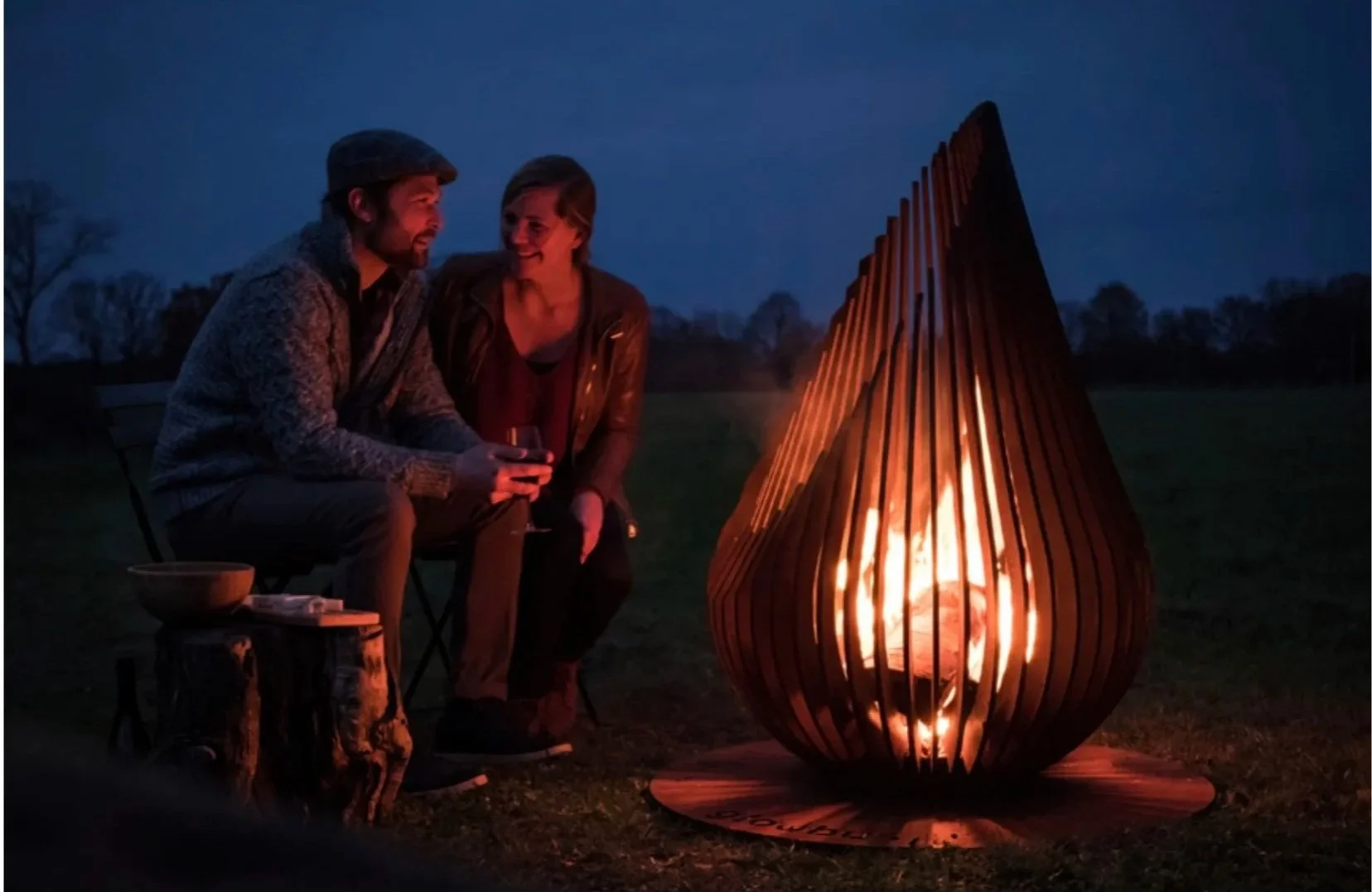
Glowbus Dewdrop Fire Pit
A fire pit creates a different experience from a conventional fireplace.
Rather than sitting in front of the fire, people gather around it. This makes fire pits particularly effective for informal entertaining and conversation areas.
Options extend well beyond the traditional steel fire bowl and now include:
Gas fire tables
Concrete fire pits
Corten steel fires
Circular and organic designs
Portable fire features
Bioethanol options
Allow enough space around the fire for comfortable seating and circulation while maintaining the clearances required for the particular appliance.

Hearthstone Fire Pit
Wood or Gas — Which Is Better Outdoors?
Neither is inherently better. They offer quite different experiences.
Consider wood if you value:
Atmosphere — the sound, smell and movement of a traditional wood fire.
Cooking — many purpose-designed outdoor wood fires can also be used for cooking.
Architectural presence — a substantial masonry fireplace can become a defining feature of an outdoor room.
The ritual of fire — for some people, lighting and tending the fire is part of the experience.

Jetmaster Alfresco Outdoor Fireplace
Consider gas if you value:
Convenience — turn it on when you want it and off when you're finished.
Clean operation — no wood storage, ash or embers.
Contemporary design — gas works particularly well with low-profile fire pits, tables and minimalist fireplace designs.
Frequent entertaining — particularly useful when you want the fire operating quickly without preparation.
The right choice comes back to how you actually intend to use the outdoor space.
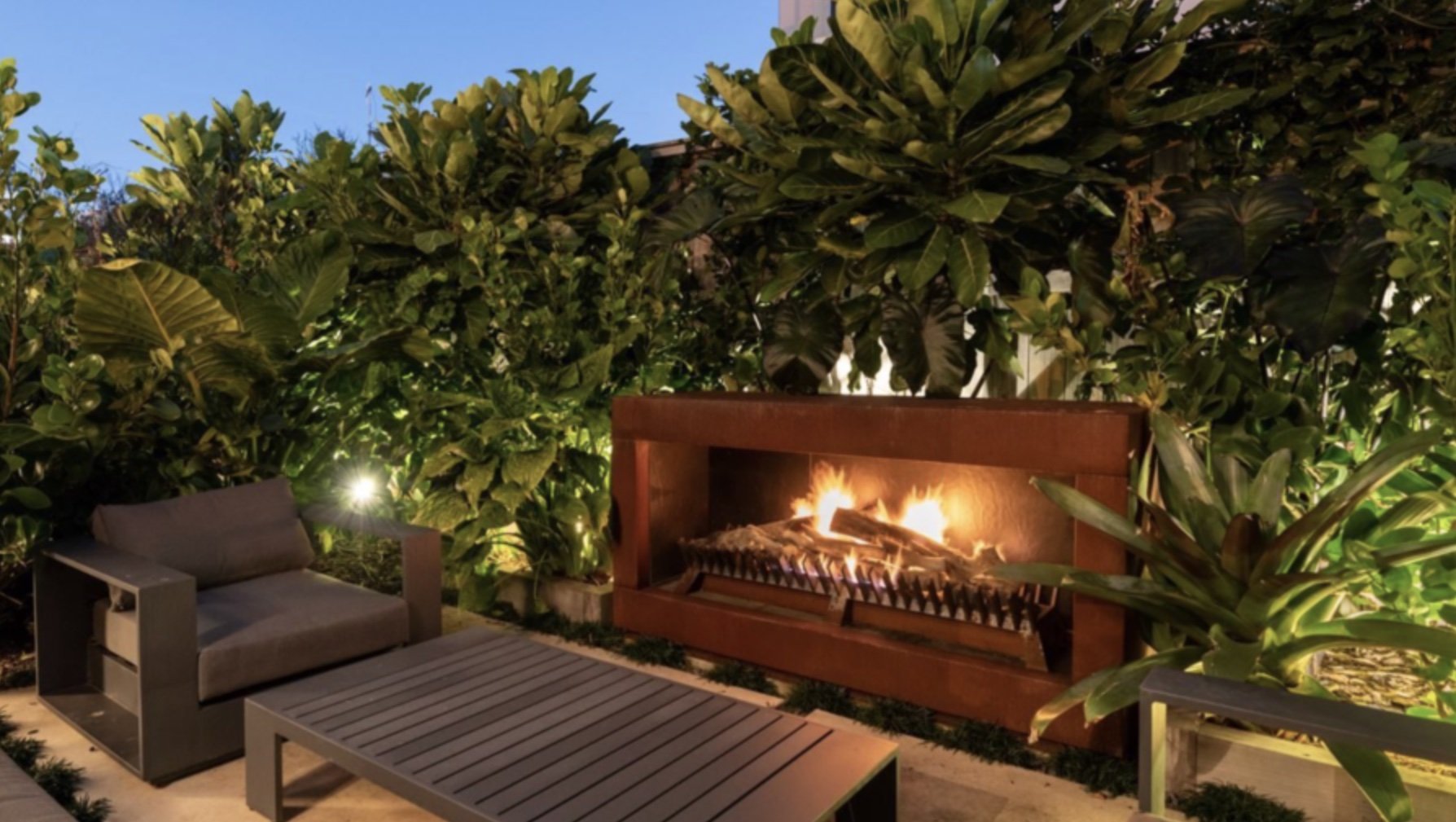
Fire Dept Flueless Gas Fireplace
Designing an Outdoor Fireplace for Warmth
A large flame doesn't automatically mean that people sitting nearby will feel warm.
Outdoors, heat can dissipate very quickly. Wind direction, shelter, ceiling height, fireplace position and seating layout can have as much influence on comfort as the fireplace itself.
This is why I look at the fireplace, seating and shelter together.
A fireplace positioned at the edge of an exposed terrace may look impressive but provide limited usable warmth. The same fire positioned within a sheltered outdoor room, with seating arranged to take advantage of radiant heat, can perform very differently.
Design for the people using the fire, not simply for the best-looking position on a plan.
Getting the Scale and Proportions Right
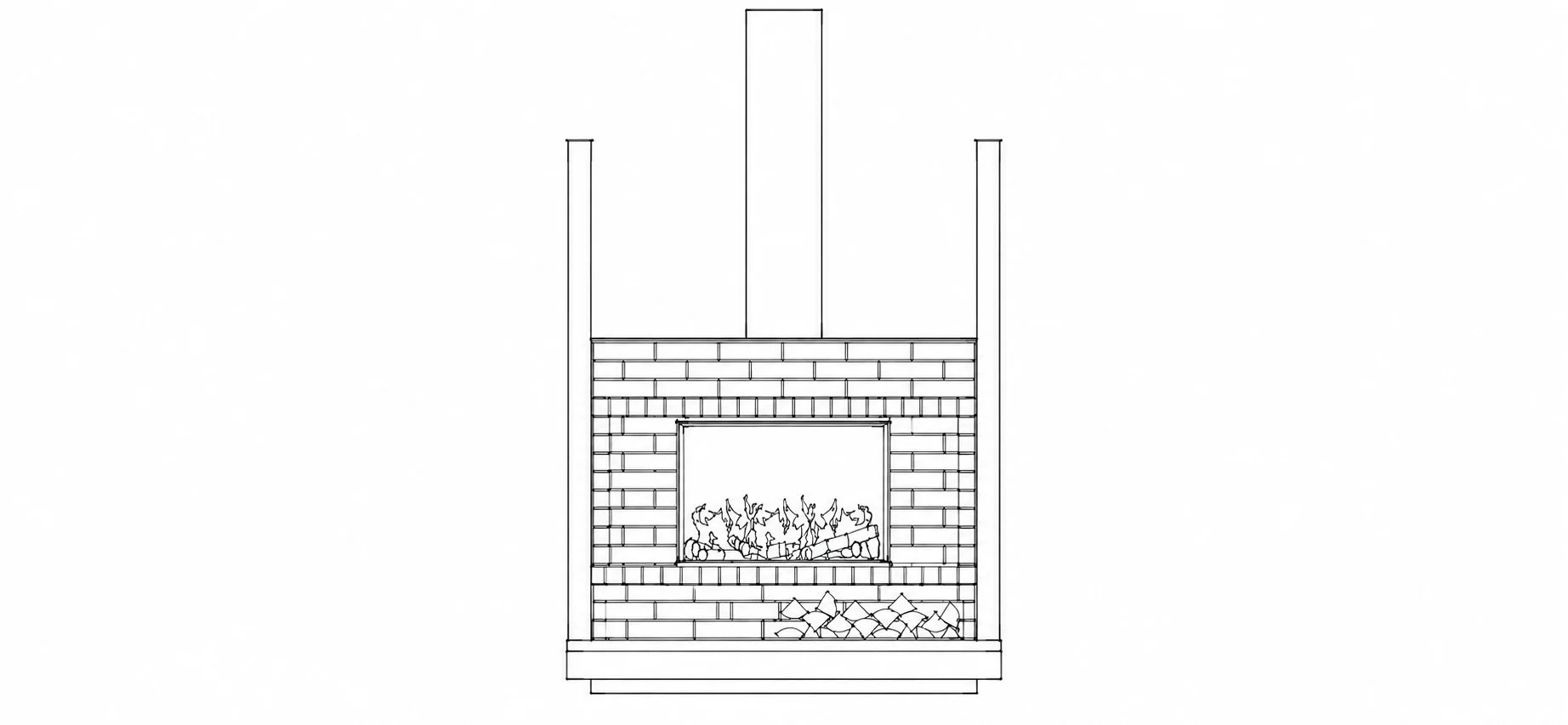
Scale is particularly important with outdoor fireplaces.
A fireplace that appears large in a showroom can look surprisingly small once it is incorporated into a substantial outdoor wall. Conversely, an oversized fireplace structure can dominate a compact courtyard.
With a built-in fireplace, consider the complete composition:
Fire opening + surround + chimney + hearth + capping + seating + landscape.
The proportions of the structure surrounding the appliance can be just as important to the finished result as the fireplace itself.
This is also where designing the fireplace before construction begins can prevent expensive changes later.
Materials for Outdoor Fireplace Design
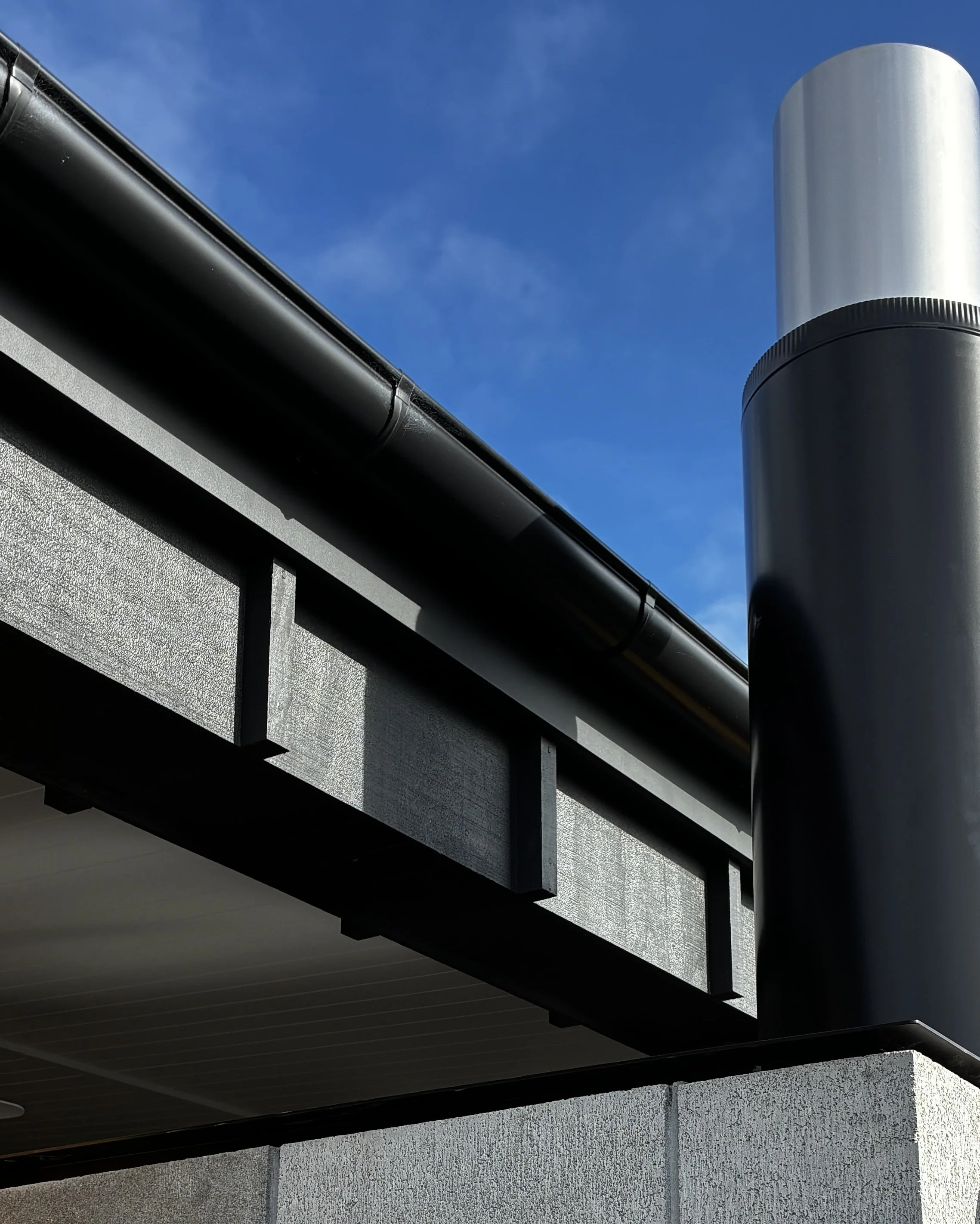
Floating Steel Capping over Blockwork Fireplace
The materials surrounding an outdoor fireplace need to satisfy both aesthetic and practical requirements.
Concrete and masonry
Excellent for substantial architectural structures and particularly well suited to contemporary New Zealand homes.
Brick
Durable and timeless, with options ranging from traditional clay brick to dark contemporary masonry.
Stone
Can integrate a fireplace beautifully with both the architecture and surrounding landscape.
Rendered finishes
Useful where a simple, monolithic fireplace form is wanted.
Steel and Corten steel
Particularly effective for cappings, architectural detailing and sculptural fireplaces. Weathering steel can also allow the fireplace itself to become part of the landscape.
Whatever the aesthetic direction, materials immediately surrounding the fireplace need to comply with the manufacturer's installation and clearance requirements.
Outdoor Cooking Fireplaces
For many New Zealand homes, combining the fireplace with cooking makes particularly good sense.
Purpose-designed outdoor cooking fireplaces can provide warmth and atmosphere while also becoming part of the outdoor kitchen.
If cooking is important to you, decide this before choosing the fireplace. It may influence the appliance, fireplace opening height, adjacent bench space, firewood storage and the overall layout of the outdoor room.
Do I Need Council Consent for an Outdoor Fireplace in NZ?
This is one of the most important questions to address early — and there isn't one answer that applies to every property in New Zealand.
The requirements can depend on where the property is located, the type of fireplace, how it is constructed, where it is positioned and whether it burns wood or gas.
It is also important to distinguish between building consent, resource consent or planning requirements, regional air-quality rules and fire-season restrictions. They are not the same thing.
Do I Need Building Consent?
An outdoor fireplace does not necessarily require building consent simply because it contains a fire.
However, the structure surrounding the fireplace may introduce building consent considerations.
A substantial masonry fireplace and chimney structure, for example, needs to be considered differently from a portable fire pit or freestanding outdoor fire.
If the fireplace forms part of a new covered outdoor room or other building work, the wider project may also have consent requirements.
This is one reason to resolve the fireplace early in the design process rather than selecting it after the outdoor structure has been designed.
Do I Need Resource Consent?
Possibly.
Resource consent is separate from building consent. Even if building consent isn't required, the fireplace structure and its proposed position may still need to comply with the relevant district or unitary plan.
Depending on the property, considerations could include:
Distance from boundaries
Overall structure or chimney height
Height-to-boundary or recession-plane controls
Site coverage
Planning overlays or special zones
Coastal, heritage or landscape controls
Other rules applying specifically to the site
A substantial built-in fireplace close to a boundary therefore requires a different level of investigation from a small freestanding fire positioned in an open garden.
What About Smoke and Outdoor Wood Fires?
Outdoor wood fires may also be subject to regional air-quality requirements, local nuisance provisions and seasonal fire restrictions.
Some purpose-designed outdoor fires used for cooking may be treated differently from indoor domestic wood burners under particular rules. However, this should not be taken to mean that every outdoor fireplace is automatically exempt.
Requirements vary around New Zealand, so they should be checked for the particular property and proposed fireplace.
What About Outdoor Gas Fireplaces?
An outdoor gas fireplace has different considerations from a wood fire.
The appliance needs to be appropriate for the proposed location and installed in accordance with the applicable gas requirements and manufacturer's instructions.
Particular care is required with flueless outdoor gas fireplaces.
A space that appears architecturally to be “outdoors” may not necessarily satisfy the ventilation requirements for a particular appliance once roofs, walls, screens or blinds are introduced.
Check the proposed location before committing to the fireplace.
What About Fire Restrictions?
Fire-season restrictions are another separate consideration.
Depending on your location and the time of year, restrictions can affect whether and when an outdoor wood fire can be used.
These requirements can change, so current restrictions should always be checked before lighting an outdoor fire.
Before Finalising an Outdoor Fireplace, Establish:
Does the fireplace or surrounding structure require building consent?
Does its position comply with the relevant planning rules, or could resource consent be required?
Are regional air-quality or smoke requirements applicable?
Are there seasonal fire restrictions?
For gas, is the proposed location suitable for that particular appliance?
These questions are generally much easier — and less expensive — to resolve before the fireplace, landscaping and outdoor structure have been finalised.
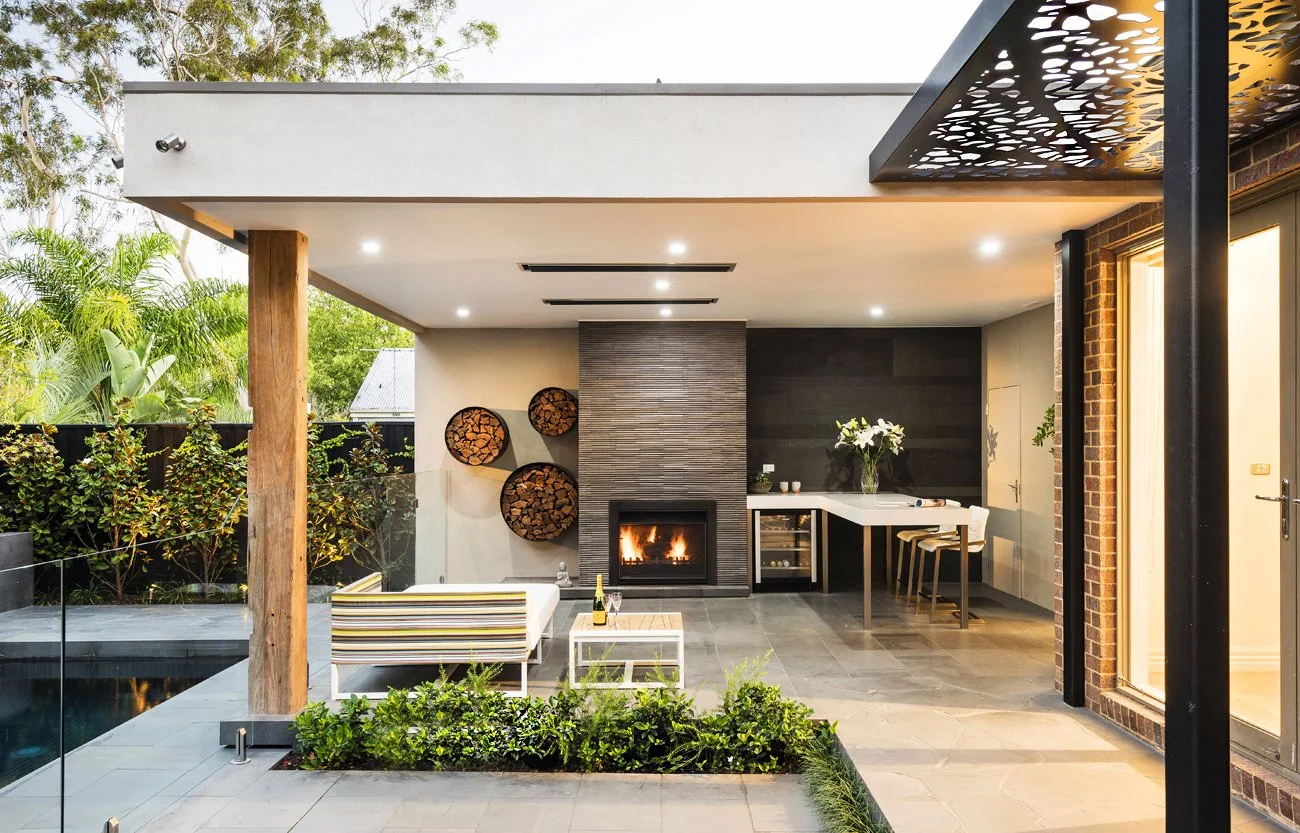
Jetmaster Alfresco Outdoor Fireplace
Outdoor Fireplace Design FAQ
What is the best outdoor fireplace for NZ conditions?
There isn't one best fireplace. The right option depends on the location, exposure, size of the outdoor area, whether you prefer wood or gas, how much warmth you want and whether cooking is important.
Where should an outdoor fireplace be positioned?
Ideally somewhere protected from prevailing winds and close enough to the seating area for the heat to be useful. Views, boundaries, surrounding materials and circulation also need to be considered.
Is wood or gas better for an outdoor fireplace?
Wood provides the traditional fire experience and can offer cooking capability. Gas provides convenience and clean operation. The better choice depends on how you intend to use the space.
Can an outdoor fireplace provide enough heat in winter?
It can, but fireplace selection alone isn't enough. Shelter, wind direction, fireplace position and seating layout have a major influence on how much heat actually reaches the people using the space.
Do I need council consent for an outdoor fireplace?
Not always. Depending on the fireplace and property, you may need to consider building consent, resource consent or planning rules, regional air-quality requirements and fire restrictions.
A substantial built-in fireplace or chimney structure can have different requirements from a freestanding fire or gas fire, so the proposed installation should be checked for the particular site before purchasing.
Can I put an outdoor fireplace under a roof?
Potentially, but the fireplace must be suitable for the proposed installation and the relevant clearance, ventilation, flue and combustible-material requirements need to be resolved.
This should ideally be established before the outdoor structure is built.
Can an outdoor fireplace be used for cooking?
Many purpose-designed outdoor wood fireplaces offer cooking capability. If cooking is important, select a fireplace designed for this purpose rather than assuming any outdoor wood fire can be used in the same way.
Planning an Outdoor Fireplace?
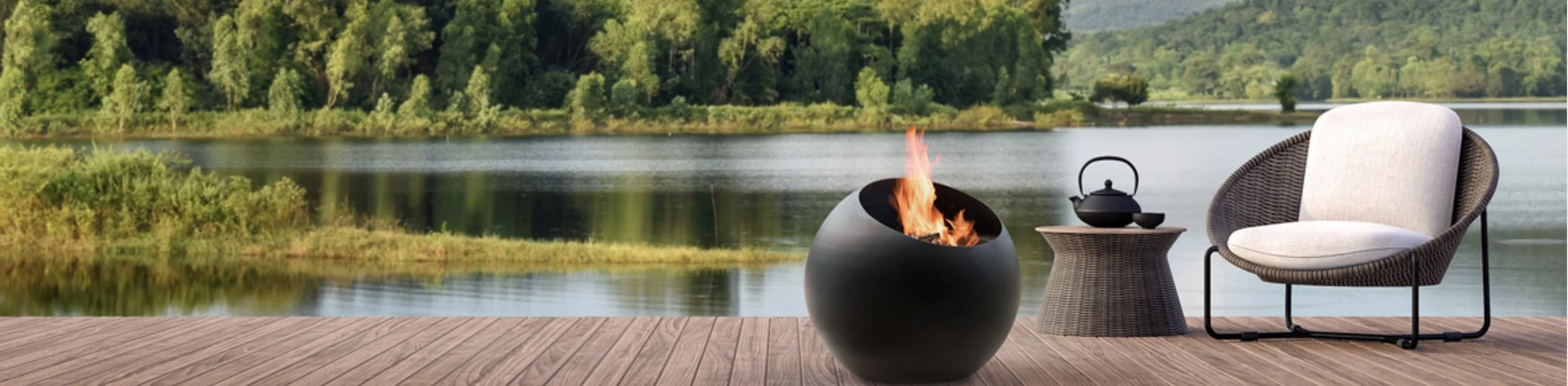
Focus Orbit Fire Pit
A successful outdoor fireplace starts well before the appliance is installed.
At Designs for Fires, I provide independent fireplace design advice for projects throughout New Zealand, helping with fireplace selection, positioning, proportions, surrounding materials, technical requirements and coordination with suppliers and installers.
Whether you're considering a built-in wood fireplace, outdoor gas fire, cooking fireplace or a more sculptural fire such as the Glowbus Dewdrop, the aim is the same:
to make the fireplace feel as though it was always intended to be part of the space.
Discuss your outdoor fireplace project →
Written by Angela Hiddleston
Independent Fireplace Designer
Bachelor of Building Science (Architecture)
Graduate Diploma Interior Design (Distinction)
20+ years' fireplace industry experience